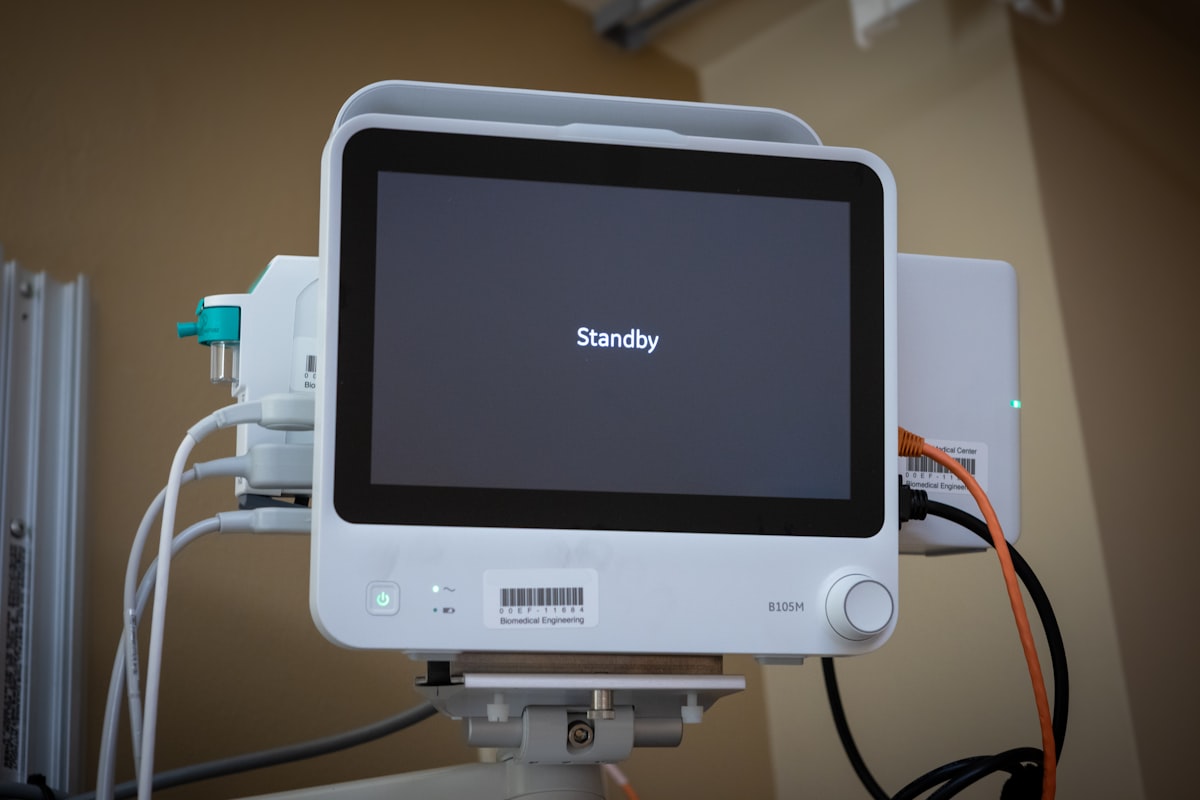
A medical device monitor on a mounting arm, showing a standby screen, with cables attached

    Audit & compliance evidence

    A signature says it was checked. A run shows what was seen.

    Every step is timestamped, ordered and screenshotted, and the whole thing replays. That is a stronger claim than a checklist, and it is a byproduct of testing rather than extra work.

    The output

    What a run leaves.

    Where it's the wrong tool

    • This is evidence of system behaviour, not a substitute for your quality management system
    • Regulatory acceptance depends on your validation plan — the artifact supports it, it does not replace it
    • A complete ordered record of what was seen and done
    • Verdicts written out: passed, failed, warn
    • Retained inside your own infrastructure

    How is it done today?

    Today

    It attests that a check happened. It cannot show what the screen actually looked like.

    What does the agent do instead?

    How it works

    The agent does
    what the person does.

    Every step is timestamped, ordered and screenshotted, and the whole thing replays. That is a stronger claim than a checklist, and it is a byproduct of testing rather than extra work.

    Step 1

    Run the verification.

    The same run that validates the system produces the evidence for it.
    Step 2

    Every step is recorded as it happens.

    Action, screenshot, verdict, time. Written out, not implied by a colour.

    Step 3

    Replay it when someone asks.

    A reviewer can re-run the exact sequence rather than take the record on trust.

    Specs

    Who it's for
    Quality, regulatory affairs and validation engineering
    At a glance
    Timestamped and ordered · Deterministic replay · Stays on your infrastructure

    Send us ten test cases.
    We'll run them on your system.

    Or download AskUI Desktop. No sign-up.