

TLDR
Multi-Agent AI systems, employing teams of specialized AI agents, offer a more effective approach to solving complex business problems compared to single-agent systems. Successful implementation hinges on workflow-centric automation, a focus on demonstrable ROI, and proactive strategies to tackle challenges related to data quality, security, and governance.
Introduction
Agentic AI has transitioned from a mere automation tool to a critical component of modern business. The central question has shifted: rather than simply asking "What is Agentic AI?", businesses now seek to understand "How can we build Agentic AI to solve our unique, complex tasks?" The answer lies in moving beyond single AI agents and embracing multi-agent systems that facilitate collaborative problem-solving, enabling a more adaptable and efficient approach.
The Paradigm Shift: From Single Agents to Multi-Agent Systems
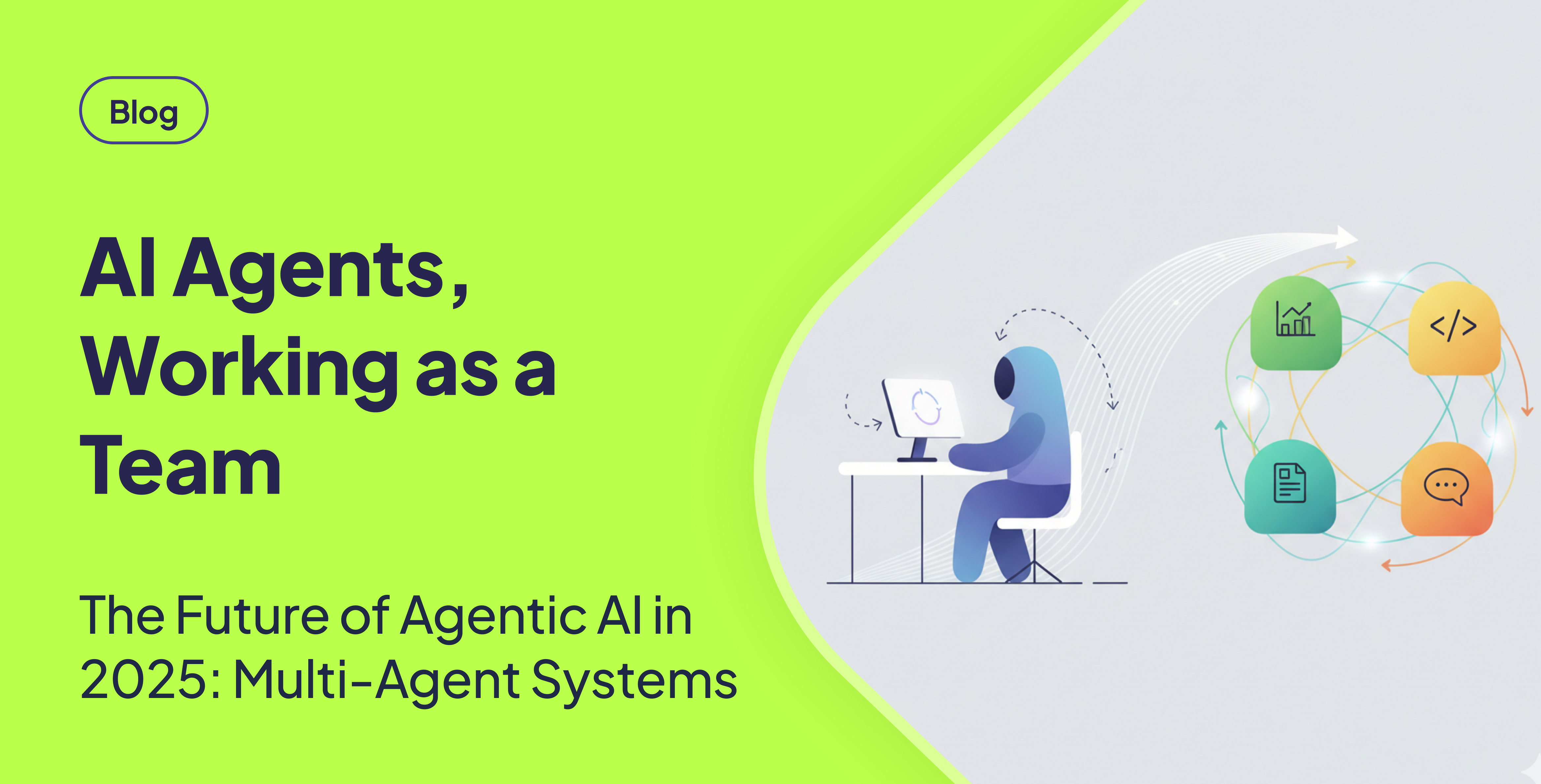
Traditional Agentic AI focused on individual agents executing specific commands in isolation. However, today's business challenges often require collaboration across specialized domains. This is where multi-agent intelligence becomes indispensable. Instead of relying on a single, general-purpose agent, consider assembling a team of specialized AI agents. Frameworks like CrewAI facilitate this collaborative architecture, enabling each agent to concentrate on its specific role, thereby enhancing both efficiency and accuracy. This approach mirrors human team dynamics, leveraging individual expertise to achieve a common objective.
Workflow-Centric Automation: Optimizing Entire Processes
A common mistake is automating individual tasks in isolation. True breakthroughs occur when optimizing entire business workflows from end-to-end. For example, comprehensive customer support automation requires a seamless process that encompasses everything from ticket creation to resolution and follow-up. This distinguishes Agentic AI from Business Process Automation (BPA) tools like Microsoft Power Automate, which excel in structured processes. Agentic AI offers the flexibility to automate unstructured, complex workflows by understanding the visual context of a UI, making it suitable for tasks that require adaptability and nuanced understanding.
Proving the Value: Real-World Applications and ROI
Agentic AI is not just a theoretical concept; it offers tangible and proven ROI across diverse applications. For example, implementing Agentic AI for mobile app and HMI system testing can result in a 70-90% reduction in test script maintenance expenses, as demonstrated by client work. Furthermore, it enables faster market entry through rapid testing and deployment methods, creating significant competitive advantages. The AI system identifies visual problems and usability issues that human testers might overlook, leading to improved end-user experiences. These dependable solutions for intricate operations result in quantifiable financial benefits.
Navigating the Challenges: Data, Security, and Governance
Implementing Agentic AI presents certain challenges. Three main issues include managing complex agent interactions, dealing with data quality problems, and ensuring robust security and governance. Successful implementation requires an appropriate AI architecture design, an organized adoption strategy, and a "Human-in-the-loop" system that allows for human involvement during critical decision points. The National Institute of Standards and Technology (NIST) provides official guidelines to help navigate these challenges.
Conclusion
Agentic AI has evolved beyond single AI agents, now offering teams of agents that work together to achieve complex solutions. Successful adoption requires understanding modern multi-agent architectures, setting clear ROI goals, and having a strategy to address real-world challenges like data quality and security. Now is the time to consider how Agentic AI can be strategically applied to your business to drive efficiency, innovation, and competitive advantage.
FAQ
How does a multi-agent AI system differ from a single-agent AI system?
Multi-agent AI systems use a team of specialized AI agents to tackle complex tasks, while single-agent systems rely on a single, general-purpose AI. The multi-agent approach allows for specialization and collaboration, leading to more efficient and accurate results.
What are the primary challenges in implementing Agentic AI, and how can they be addressed?
Key challenges include managing agent interactions, ensuring data quality, and maintaining security and governance. These can be addressed through careful AI architecture design, a well-organized adoption strategy, and incorporating "Human-in-the-loop" systems for critical decision points.
How can I measure the ROI of Agentic AI in my business?
ROI can be measured by tracking metrics such as reduced operational costs, faster time to market, decreased maintenance expenses (e.g., in testing), and improved end-user experiences. Quantifiable financial benefits should be the primary focus.
Is Agentic AI suitable for automating unstructured workflows?
Yes, Agentic AI is particularly well-suited for automating unstructured, complex workflows due to its ability to understand the visual context of a UI and adapt to tasks requiring nuanced understanding. This sets it apart from traditional Business Process Automation (BPA) tools.
What frameworks are available to help build a multi-agent AI system?
Frameworks like CrewAI are designed to facilitate the development of collaborative multi-agent architectures, enabling each agent to focus on its specialized role and contribute to a unified solution.