

TLDR
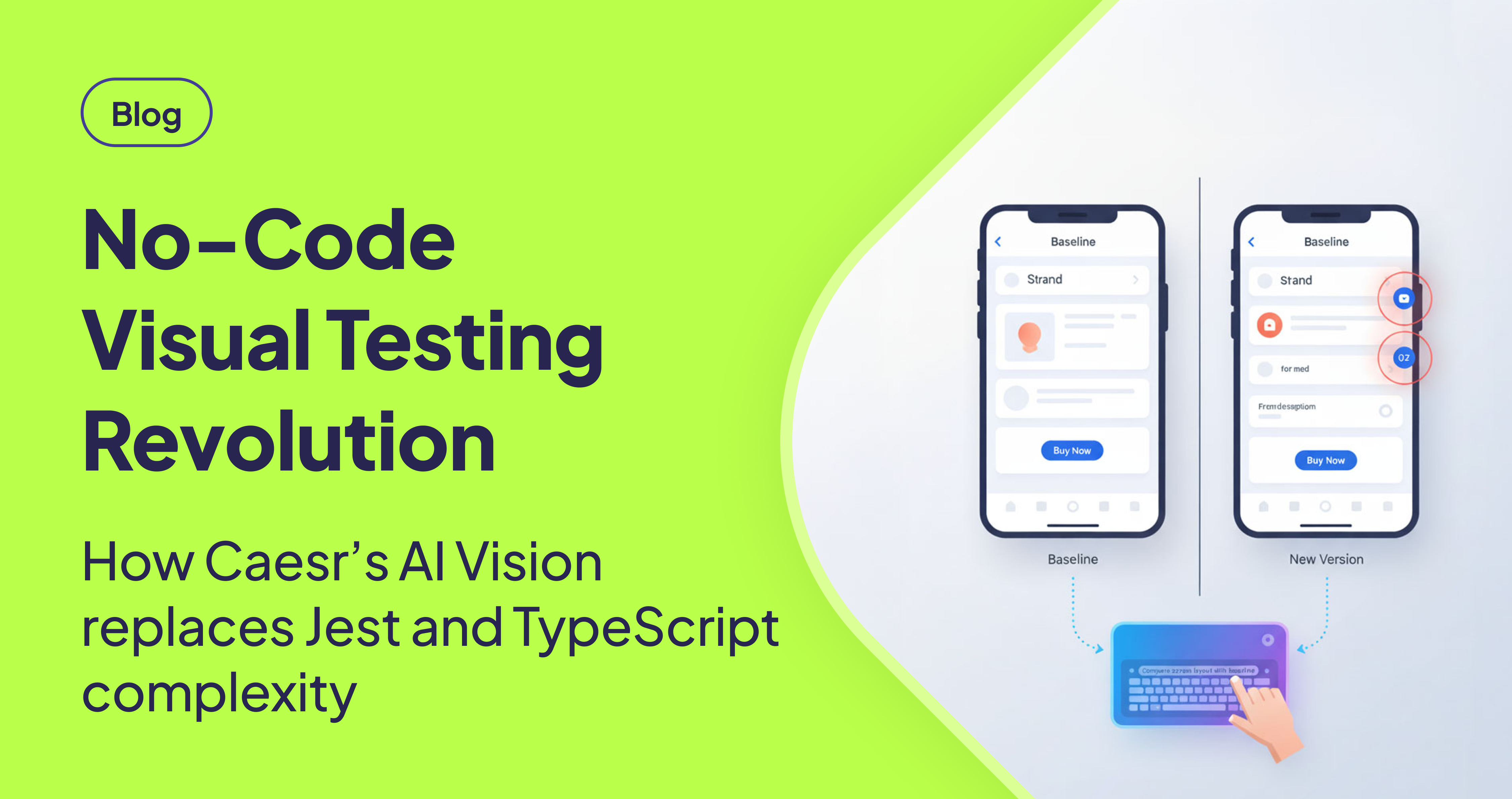
Visual Regression Testing (VRT) is crucial for maintaining an application's visual integrity after code changes. Contemporary AI-driven tools like Caesr.ai's Vision Agent analyze UI context and structure, minimizing false positives that often plague legacy pixel-comparison methods, thereby making VRT more efficient and reliable.
Introduction
Visual Regression Testing (VRT) is a vital process for guaranteeing that recent code modifications haven't inadvertently damaged the visual presentation of your application. It verifies that elements like buttons, layouts, and text appear precisely as intended for the end-user in every release.
The Challenges of Traditional VRT
Traditionally, implementing VRT involved manually integrating various components and writing custom code to manage image buffers and external Jest matchers. This approach was prone to significant false positives, often flagging irrelevant pixel shifts as errors. This manual effort and unreliability often made VRT a time-consuming and frustrating task.
AI-Powered VRT: A New Paradigm
With the advent of AI-powered solutions like Caesr.ai's Vision Agent, the landscape of VRT is changing. Caesr.ai leverages AI Vision for reporting and execution, all based on simple natural language prompts. This enables a more intuitive and efficient testing process.
Understanding Context, Not Just Pixels
The key difference lies in the AI's ability to understand the context and structure of the UI, rather than simply comparing raw pixels. This approach significantly reduces false positives by focusing on meaningful visual changes. This intelligent approach allows teams to focus on real issues, rather than sifting through irrelevant alerts.
Caesr.ai Prompt Example
# Example Prompt: Verify that the login button is visible and in the correct position on the homepage.For other complex automation examples powered by a single prompt, explore: [Link to other complex automation examples]
Conclusion
Visual Regression Testing is evolving from a complex, error-prone process to a more streamlined and reliable one with the help of AI Vision. By adopting tools like Caesr.ai, you can focus on being a Test Strategist, rather than getting bogged down in debugging environment issues, image buffer errors, and external library compatibility. Caesr.ai handles the complexity with AI Vision, delivering accurate and efficient VRT results.
FAQ
What is the main benefit of using AI-powered VRT?
AI-powered VRT significantly reduces false positives compared to traditional pixel-based comparison methods. This is because AI can understand the context and structure of the UI, focusing on meaningful visual changes rather than minor, irrelevant pixel shifts.
How does Caesr.ai simplify Visual Regression Testing?
Caesr.ai simplifies VRT by using AI Vision for reporting and execution, all based on simple natural language prompts. This eliminates the need for manual integration of various components and custom code, making the process more intuitive and efficient.
Is AI-powered VRT suitable for all types of applications?
Yes, AI-powered VRT is suitable for a wide range of applications, including web applications, mobile apps, and desktop software. The AI's ability to understand UI context makes it adaptable to different interfaces and designs.
Can AI-powered VRT integrate with existing testing frameworks?
The provided text does not specify. You should consult the documentation for the specific tool.
What kind of expertise is needed to implement Caesr.ai for VRT?
Caesr.ai's approach allows users to focus on test strategy. A test strategist can then focus on natural language prompts without needing to worry about debugging environment issues, image buffer errors, or external library compatibility.