 YouYoung Seo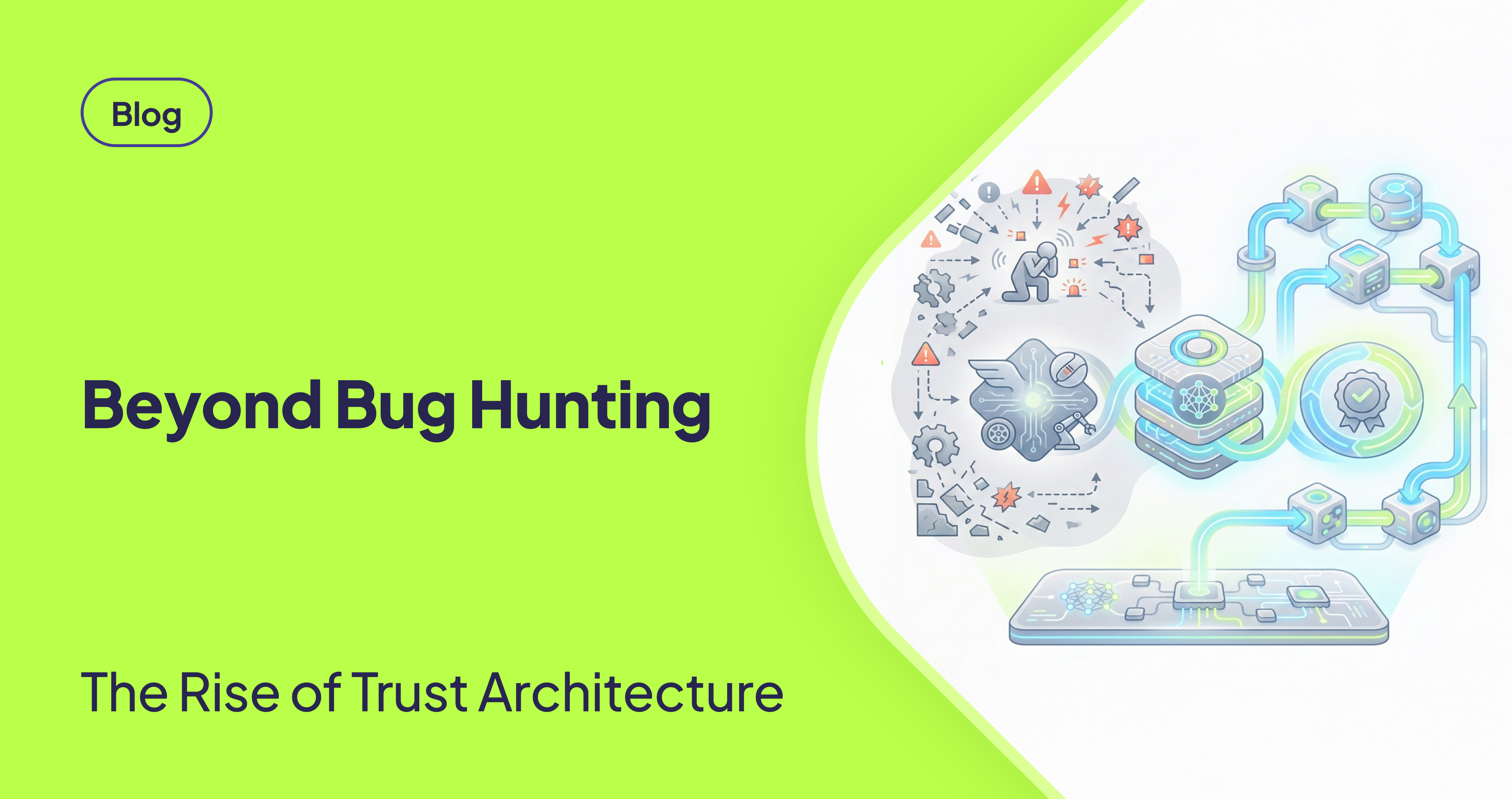
TLDR
In safety-critical industries such as Automotive, Aviation, Medical, and Infrastructure, QA is not disappearing. It is evolving into specialized, high-trust discipline. The role is shifting from routine test execution to establishing deterministic safety boundaries in complex, unpredictable scenarios. By adopting Agentic Test Automation via AskUI, enterprises eliminate the maintenance tax of navigating fragmented UIs. This liberates the human QA professional to become a Trust Architect, focusing on adversarial thinking and regulatory traceability.
Where “Move Fast and Break Thing” is a Liability
The “Move Fast and Break Things” philosophy has reached its structural limit. In industries where software errors lead to litigation or loss of life, “breaking things” is a failure of engineering, not a strategy growth.
-
Automotive IVI and HMI: Software has transitioned from a supporting feature to a core safety component. A failure in a system to relay critical states such as a brake failure warning or engine overheat is a systemic hazard.
-
Medical devices: Reliability is regulatory mandate. Here, QA is final gatekeeper between a functional prototype and a certified, market product.
-
POS and Infrastructure: In global payment networks. data integrity errors trigger massive lawsuits and institutional collapse.
In these high-trust sectors, QA is shifting from back-end support function into High-Trust Discipline that serve as critical safeguard, transforming systemic uncertainty into calculated risk.
1. The Strategic Shift: Form Testing to “Trust Engineering”
As AI agents take over mechanical execution of tests, the real value is changing upward to Design of Trust.
-
Establishing Deterministic Safety Boundaries: Real-world scenarios rarely have single correct answer in a requirements doc. The new role of QA is to analyze these complex contexts and define the non-negotiable safety parameters the system must respect under all conditions.
-
Strategic Adversarial Thinking: While AI follows established patterns, humans provide systemic skepticism. Human architects design high-impact failure scenarios that exist outside of historical training data. This effectively stress-tests the systems’s resilience before it reaches the field.
-
Architecting Regulatory Traceability: compliance such as ISO 26262 or FDA standards is no longer about manual documentation. It it about engineering traceable link between risk analysis and verified reduction, ensuring every safety claim is backed by objective, reproducible evidence.
2. Fragmentation Penalty: How UI Variety Drains R&D Budgets
Despite this strategic necessity, many organizations remain trapped in cycle of manual maintenance. For complex system integrators delivering sophisticated solutions across diverse platforms, the primary obstacle is the accumulated cost of UI fragmentation.
-
The fragmentation Barrier: Each platform variant shows a unique interface and interaction model. Traditionally, this required a linear increase a manual labor, creating a calling paradox where more automation led to an endless cycle of fixing brittle, code-based scripts for every localized version.
-
The Talent Drain: When a significant portion of senior quality engineer’s time is spent fixing broken test, it creates a hidden penalty that drains the R&D budget. This operational drag prevents experts from focusing on high-level safety design, effectively slowing down the entire innovation cycle for the enterprise.
3. AskUI: Agentic Test automation as Infrastructure
AskUI provides the Agentic infrastructure that allows human experts to stop being Script Mechanics and start being Trust Architects
-
Implementation- Agnostic Verification: Driven by its capabilities, AskUI achieves Semantic Screen Understanding to identify UI elements by functional intent rather then underlying selectors. Just a human recognizes a stop sign regardless of its design, AskUI interacts with elements across fragment interfaces. This eliminates the friction of manual maintenance effectively caused by minor implementation changes.
-
Autonomous Evidence via Agent OS: The Agent Os act as the hand, generating an objective audit trail including logs, screenshots and interaction maps. This transforms traceability from manual burden into self-documenting verification, providing the objective evidence required by global regulators.
-
Goal Based Empowerment: By offloading mechanical navigation to AI Agents, the expert is finally free to focus on defining the failure modes that the automation will then rigorously verify across any platform from standard desktop OS to embedded HMI environments.
FAQ
Q: How does Agentic Test automation differ from traditional Automation?
A: Traditional tools are tied to implementation code. AskUI utilizes AI Agents that function as the eyes and hands, using Agentic Computer Use to achieve specific safety goals. This significantly reduces the engineer overhead of cross-platform maintenance and enable self-healing test resilience.
Q: Does this impact regulatory audits?
A: Audits are simplified because AskUI is audit-ready by design. When the agent automatically creates unalterable logs and screenshots, you have all evidence required for ISO and FDA compliance. This saves you from the headache for manual documentation and makes compliance a natural part of your workflow.
Q: Is the human role being replaced?
A: No, its being elevated. The Routine Test Executor, someone who spends all day manual clicking through menus or fixing brittle scripts, is becoming obsolete. It is being replaced by Trust Architect. The most valuable skill in 2026 is the ability to model complex risks and direct AI agents to verify those deterministic boundaries.