

TLDR
Caesr uses natural language processing to automate test suite generation from descriptions of UI elements. It covers authentication, form validations, navigation, and edge cases, speeding up QA processes, improving test coverage, and enhancing team collaboration.
Introduction
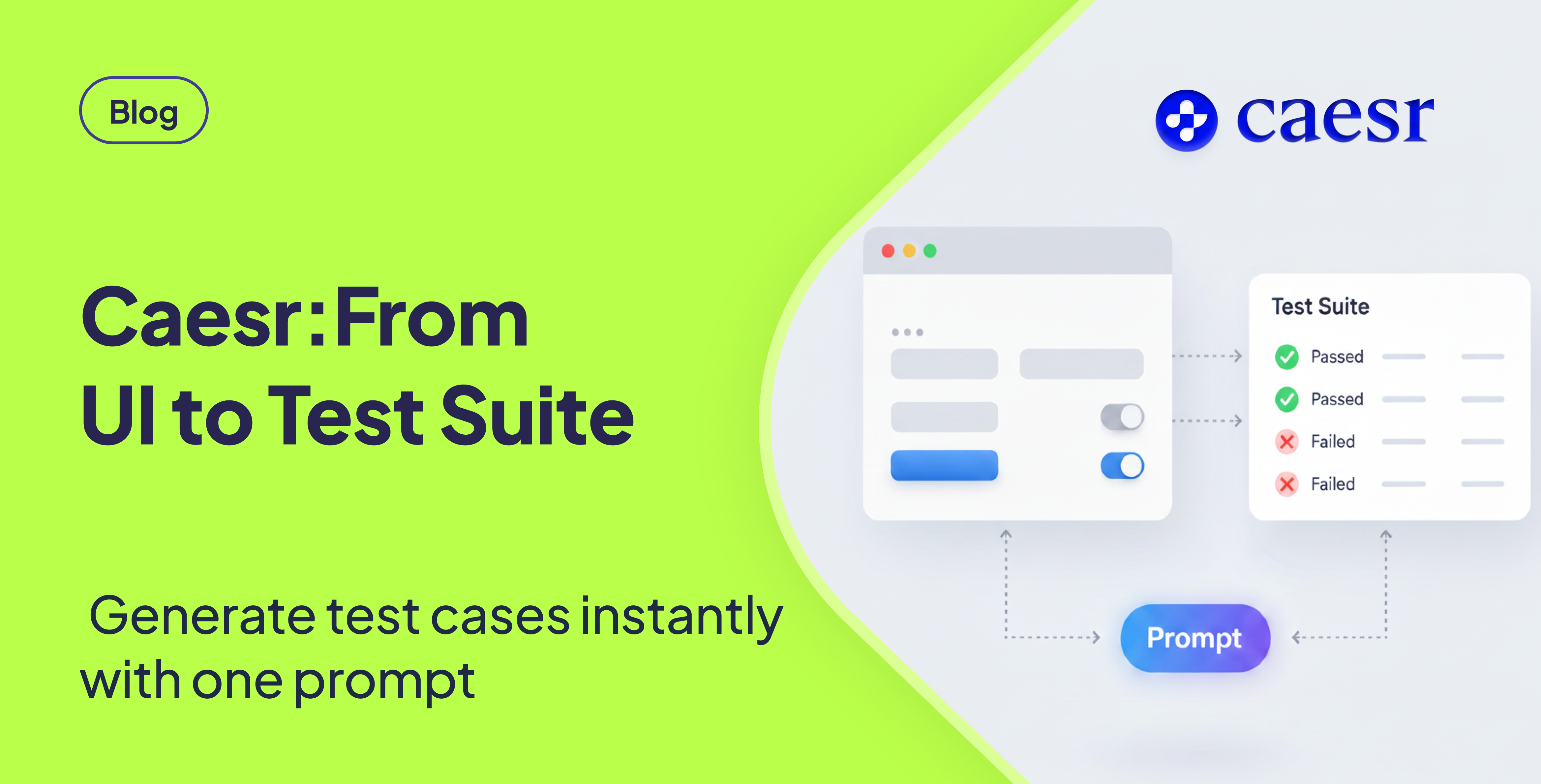
QA teams often spend a significant amount of time on repetitive test suite development. Caesr addresses this challenge by automatically generating test suites from natural language descriptions of screen content, transforming them into structured test automation workflows. This approach streamlines the QA process and enhances test coverage.
The Power of Natural Language Test Generation
Caesr leverages the power of natural language processing to analyze UI elements and generate comprehensive test suites. This transformative approach significantly reduces the time and effort traditionally required for test planning and execution.
From Prompt to Test Suite: How Caesr Works
The process begins with a simple, natural language prompt. For example: "Analyze the 'Control Deck' UI currently visible on the screen. Based on your analysis, generate a test suite for all visible interactive elements. Please start with a brief summary of the main test categories and keep the descriptions for each test case concise and easy to understand. The suite should still cover positive, negative, and critical edge cases."
Comprehensive Test Coverage
Caesr's automated test suite generation covers a wide range of critical testing areas, ensuring thorough coverage and reducing the risk of overlooking potential issues.
Key Areas of Test Coverage
From a single prompt, Caesr creates a structured test suite that encompasses:
- Authentication Checks: Validating login functionalities and robust error handling.
- Form Validations: Ensuring input fields handle positive inputs, negative inputs, and boundary conditions correctly.
- Navigation Flows: Verifying the expected behavior of all buttons and links within the application.
- Edge Cases: Addressing complex scenarios such as empty fields, invalid formats, and stalled actions to ensure robust performance.
Transforming QA Workflows
Implementing Caesr has a dramatic impact on traditional QA workflows, leading to significant improvements in efficiency, coverage, and collaboration.
Benefits of Automated Test Suite Generation
Caesr revolutionizes traditional QA workflows by:
- Accelerating Test Planning: Reducing test planning time from hours to seconds, freeing up valuable resources for other critical tasks.
- Ensuring Comprehensive Coverage: Automatically identifying and testing edge cases that might be missed in manual testing.
- Improving Collaboration: Providing test cases that are easily understandable by both technical and non-technical teams, fostering better communication and teamwork.
Conclusion
Caesr revolutionizes QA by automating test suite generation through natural language prompts. Its ability to rapidly create comprehensive, well-organized test suites accelerates test planning, ensures thorough test coverage, and promotes better team collaboration, ultimately leading to higher quality software.
FAQ
How accurate is Caesr in identifying UI elements and their functionalities?
Caesr employs advanced natural language processing and machine learning algorithms to analyze UI elements accurately. While no system is perfect, Caesr is designed to provide a high degree of accuracy in identifying interactive elements and their intended functions.
Can Caesr handle dynamic UI elements or frequently changing applications?
Yes, Caesr is designed to adapt to dynamic UI elements and evolving applications. Its intelligent algorithms can re-analyze UI structures and update test suites accordingly, ensuring that tests remain relevant and effective even as applications change.
Is it possible to customize the generated test suites or add specific test cases?
Absolutely. Caesr's generated test suites serve as a solid foundation, which can be easily customized to include specific test cases or scenarios unique to your application. This flexibility allows QA teams to tailor their testing efforts to meet specific project needs.
What types of applications or platforms does Caesr support?
Caesr is designed to support a wide range of applications and platforms, including web applications, mobile apps, and desktop software. Its adaptability allows QA teams to use it across various development environments.
How does Caesr improve collaboration between developers and QA teams?
Caesr improves collaboration by generating test cases in a clear, natural language format that is understandable by both technical and non-technical team members. This transparency facilitates better communication, reduces misunderstandings, and ensures that everyone is aligned on testing objectives and results.